
Inside Trends & Friends: How We Throw a Client Event That Actually Pays Off
The Free Lunch With a Plan
Nobody warns you how many events you’ll end up attending, planning, or working as an adult. After a handful, one thing becomes obvious: not all events are created equal. The ones that stand out are built with intention and a little flair.
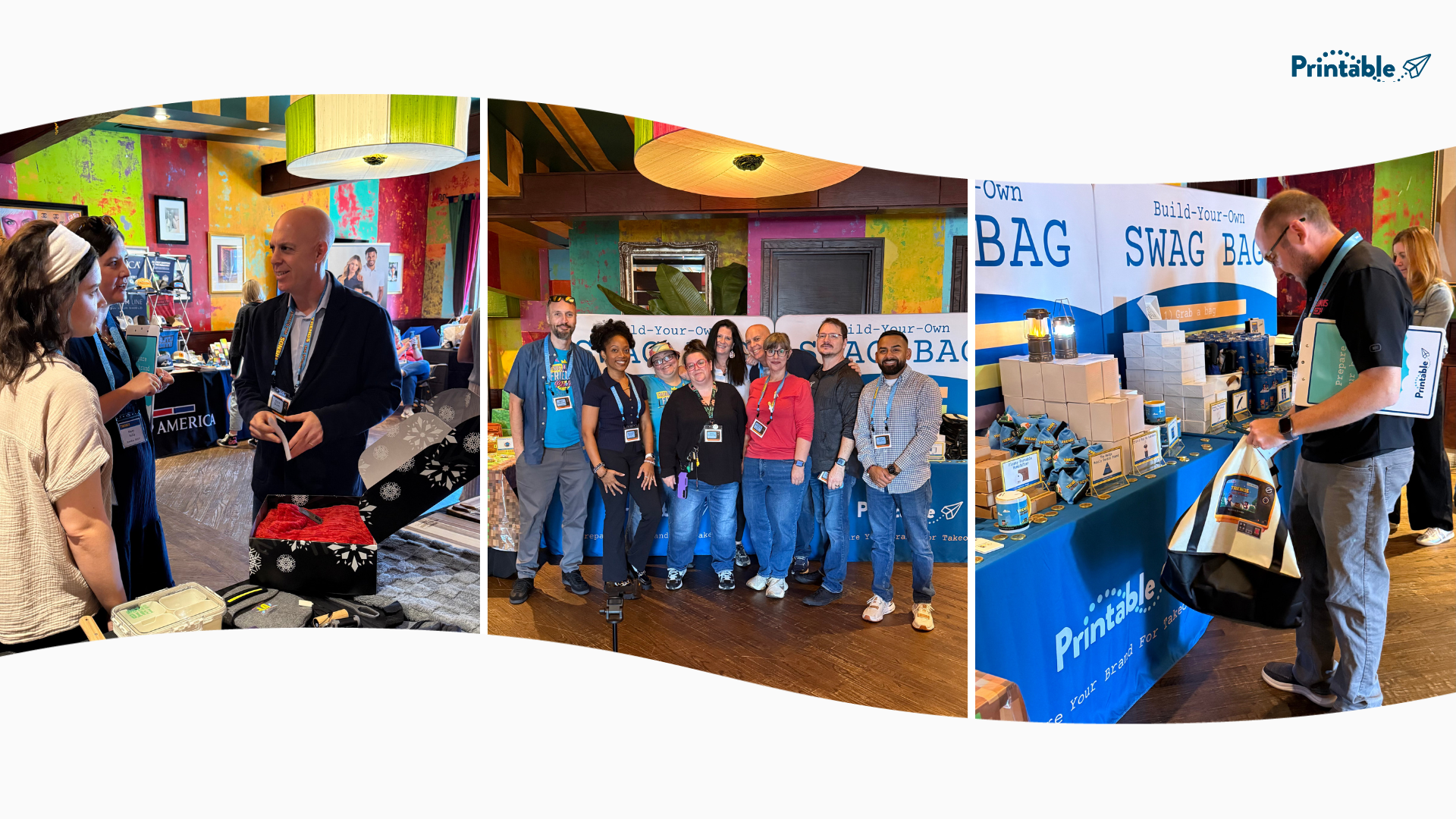
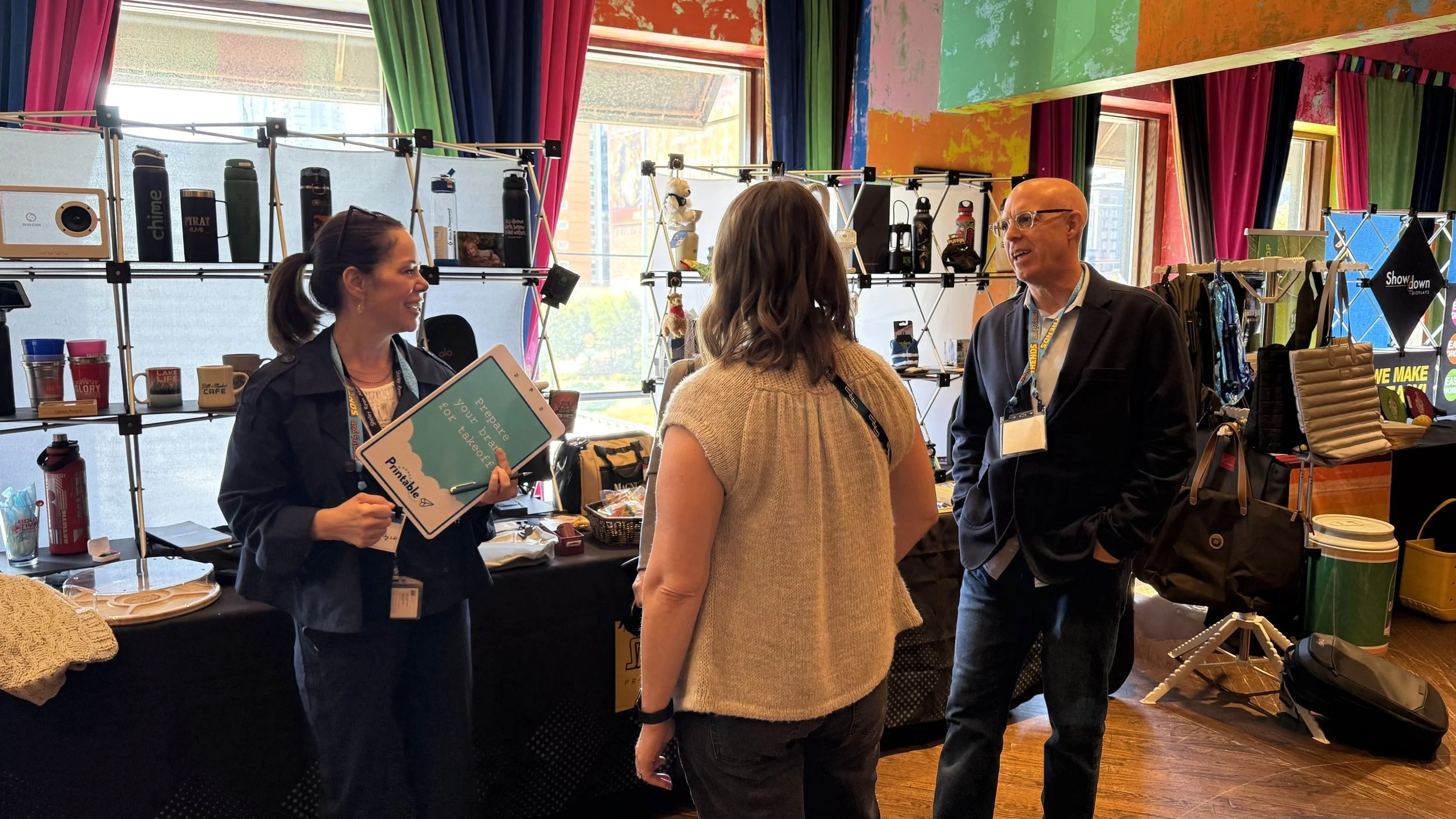
Twice a year, in spring and fall, we bring our clients and top vendors together for lunch, new products, and face time with the Printable team. We recently held our Fall Trends & Friends luncheon at Carnivale Chicago, and it was our best yet. Of the 61 guests who RSVP’d, 53 walked through the door, an 87% attendance rate that keeps climbing. That’s no accident. To our guests, Trends & Friends looks and feels like a party. Behind the scenes, every detail has a strategy.
In this case study, we’re pulling back the curtain on the space, the merch, and the people, and sharing why we think guests keep showing up. (If you’ve ever worked a booth, [Stop, Stay, and Remember] is the flip side of this story.)
The “Why”: What We’re Actually Trying to Do
When we fill a room in downtown Chicago, we’re after three things: connect, educate, and retain.
We all get plenty done remotely, but face-to-face time is still what builds long business partnerships. Trends & Friends is where a name on an email becomes a real person, and where our reps learn what clients are working on over a good meal instead of a calendar invite.
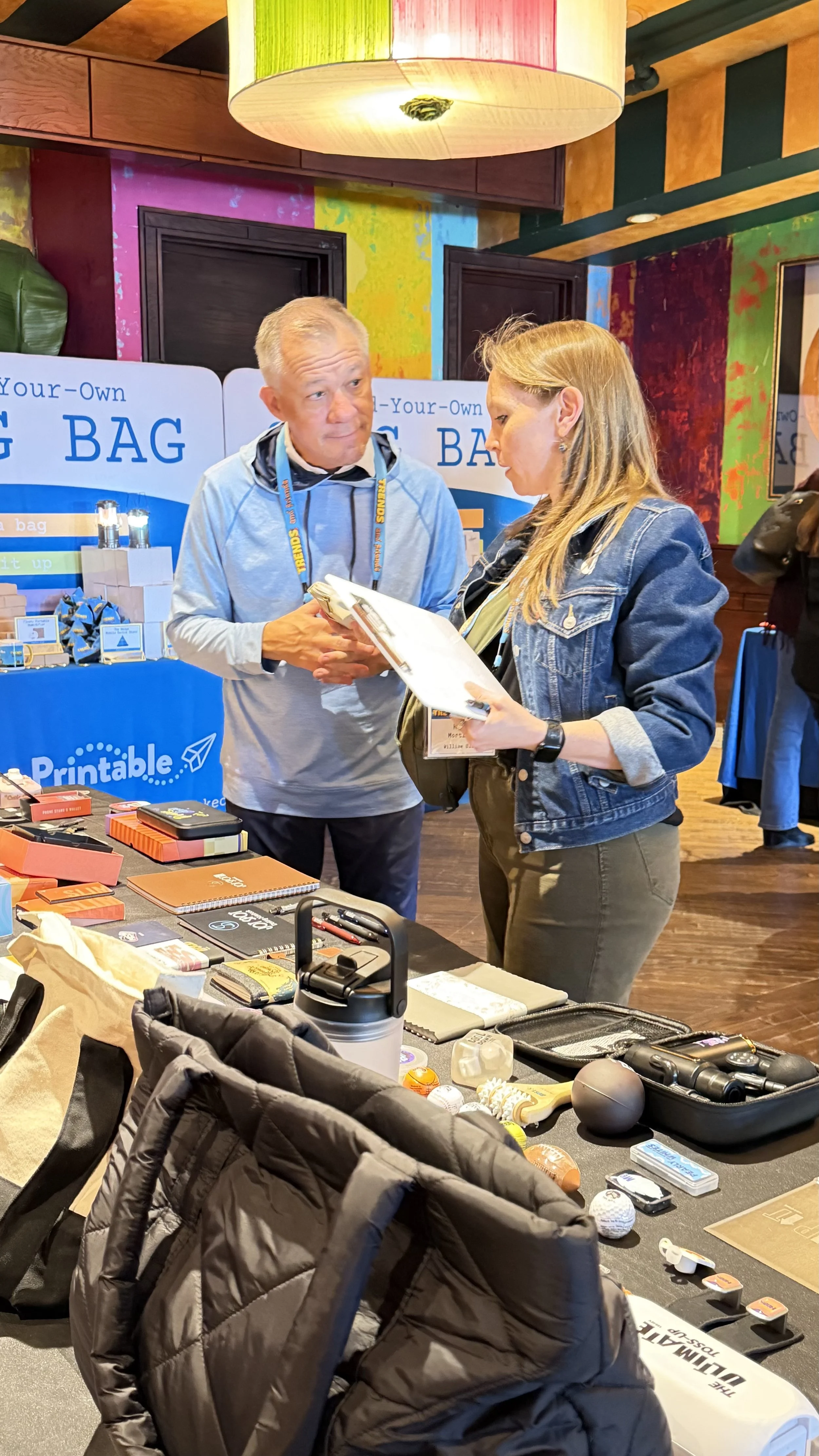
It’s also a chance to educate. With our vendors in the room, guests get a true in-person shopping experience. We often mail samples, but here they see products they may never have considered and can ask the experts questions on the spot. We set up our own station too, covering kitting, fulfillment, and online company shops, because Printable has grown far beyond a simple merch supplier.
Add hand-selected giveaways (the kind our own teammates want!), a great meal, and real conversation, and guests leave feeling valued instead of marketed to. That’s the retain part. Put it all together and you get an immersive learning experience and a really good lunch. Here’s how we built a room to deliver it.
Setting the Space: Designing the Flow
Whether you’re working a booth or planning the whole event, you have to think about how guests will move through the space. We took the ideas from [Stop, Stay, and Remember] and applied them on a bigger scale.
Guests start at the welcome table, where two team members hand over a name badge and a clipboard for notes and sample requests. This year, each clipboard already held a project sheet printed with the guest’s name. We set the table away from the main room so instructions could be heard and a line wouldn’t clog the flow, and a small display of the free merch gave guests a preview of what was waiting for them.
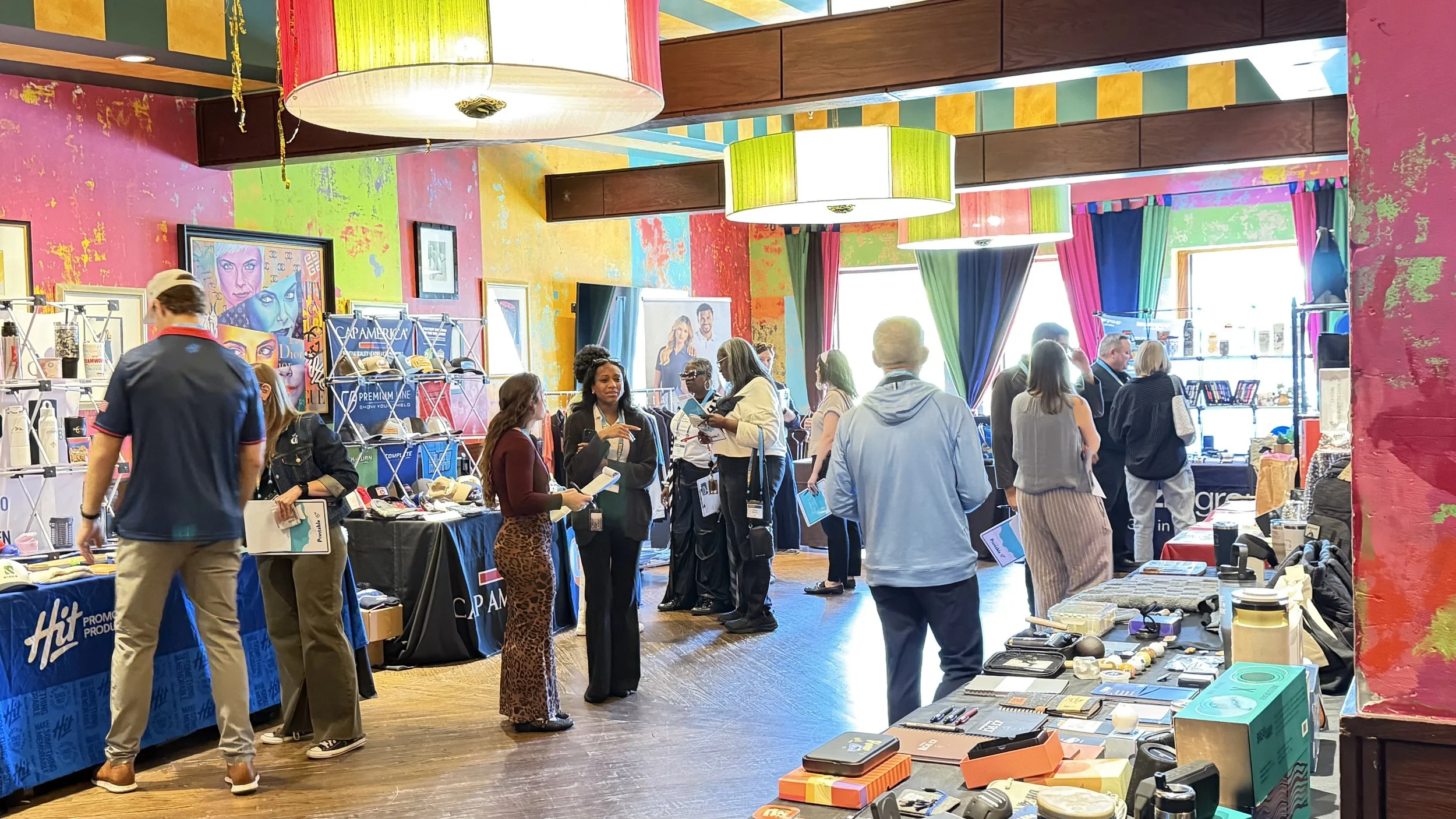
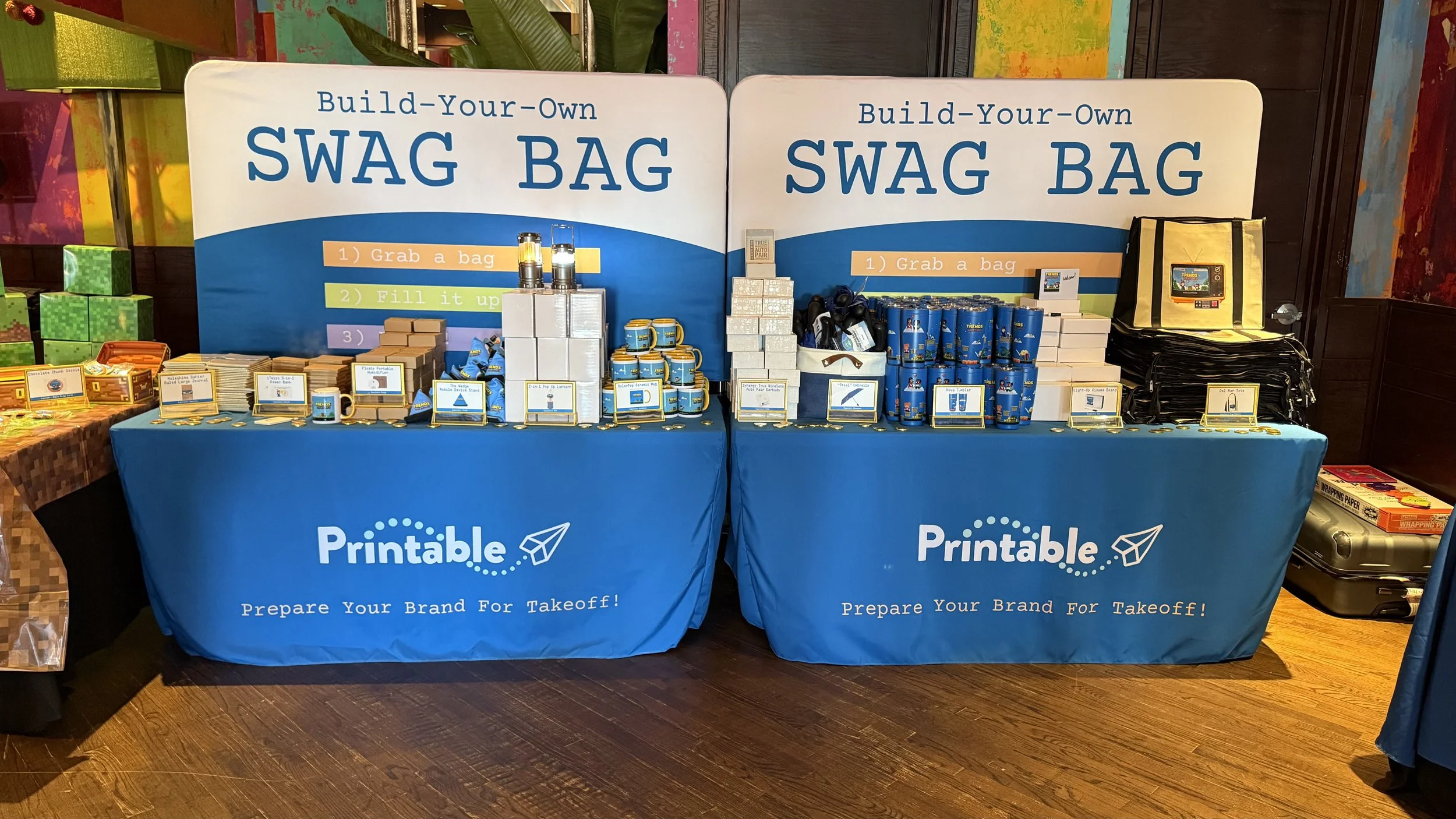
The vendor tables begin right where guests enter the main space, so everyone’s first stop is a conversation. Our own station sits alongside them, and this is where we walk the walk. Many of our clients host events or buy merch for them as part of their jobs, so we show them what’s possible: event banners, custom lanyards, a themed swag bag, and our shops, kitting, and fulfillment services. Telling someone “we do custom work” rarely clicks until they see something designed for them.
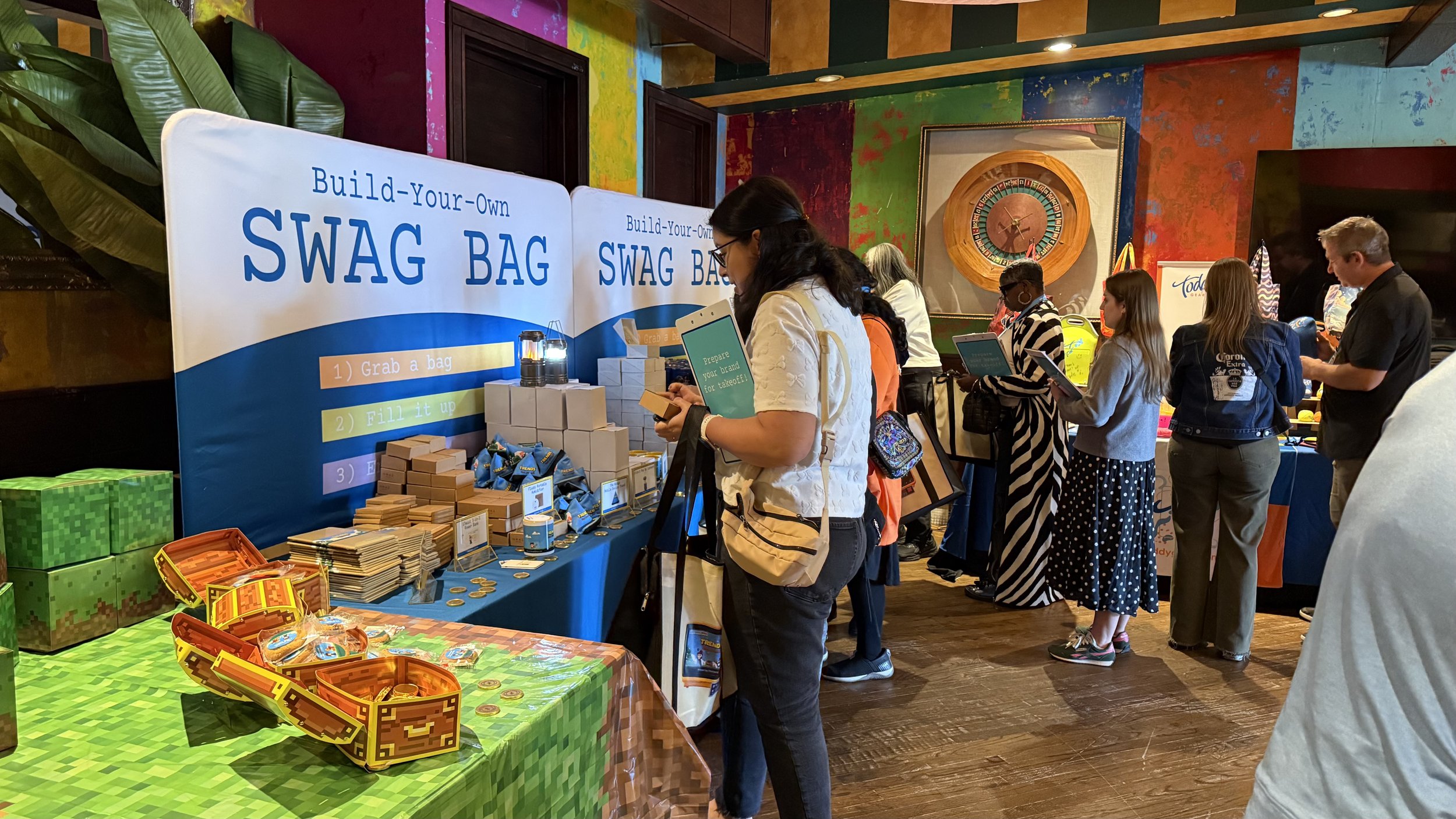
The swag table sits at the very back on purpose, so guests have to pass every vendor before they reach their “prize.” The buffet starts right where the swag table ends. After all that walking and talking, a cold drink, a hot plate, and a good seat is the perfect finish, and it gives guests time to compare notes and circle back to anything they missed.
Steal This: Layout Tips
Put check-in away from the action. Lines and instructions shouldn’t jam the main room.
Preview the prize early. Show a sample of the giveaway at check-in.
Hide the swag in the back. Make guests walk past your vendors or activations to get to it.
Pre-print the paperwork. Names on project sheets mean no illegible or missing info later.
End with a seat. Food and seating at the finish line turn a walkthrough into real conversation.
The Merch: How We Picked What to Give Away
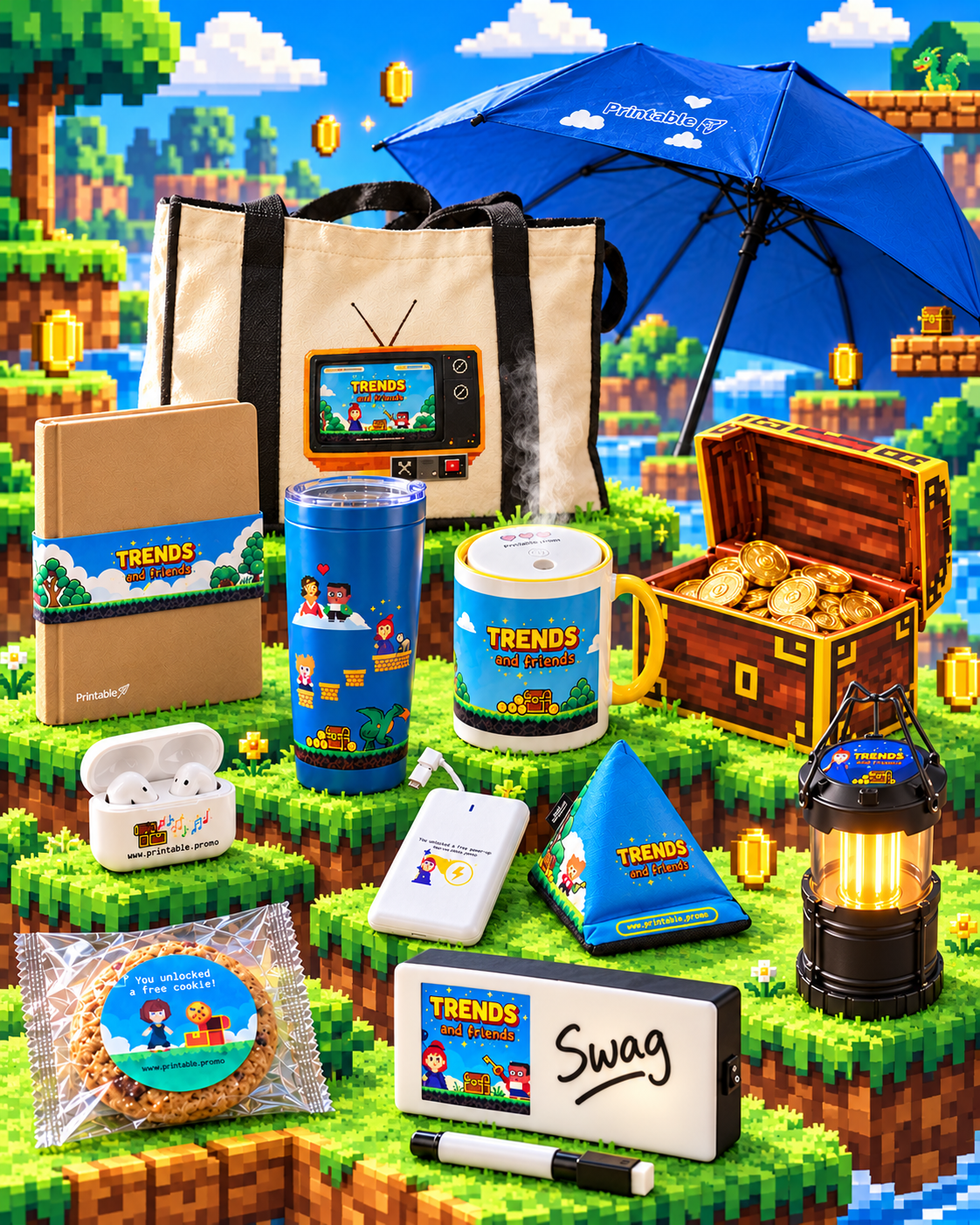
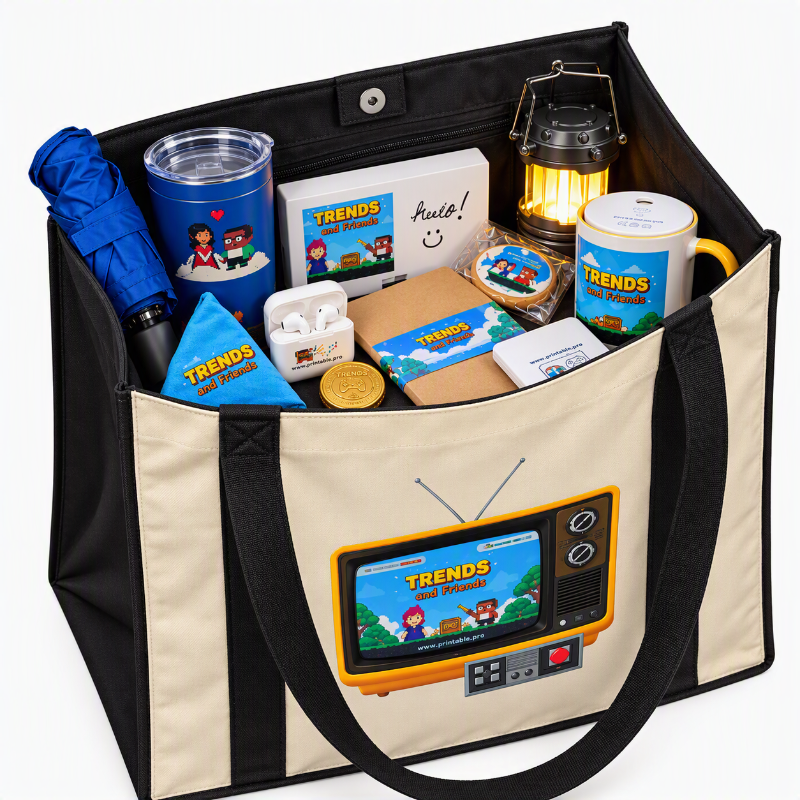
This fall, we went all in on a video game theme. Every item was designed in a retro pixel-art style with a shared palette of blue, yellow, and treasure gold, and the artwork actually tells a story. A hero with a golden key makes his way across the products, past a fire-breathing dragon and a chest of gold, on a quest to save the princess. The notebook band says it plainly: “Save the Princess! Bribe the dragon with merch.”
Our Printable wizard pops up too, inviting you to have a drink while he shows you the merch trends. Then there are the “easter eggs” in the copy. The cookie says “You unlocked a free cookie!” and the power bank says “You unlocked a free power-up!” The mug even has a heads-up display tracking your Client Status, Merch Credits, and Cookie Level.
That’s a [Matching Merch Collection] pushed all the way: 13 products from different vendors, one cohesive story. Our in-house artist designed every piece, and we can do the same for your brand.
The swag table works toward the same three goals as the rest of the event. Our team stands at the start of it to help guests load up, explain how items work, and point out personal favorites, and nobody feels pitched to when a teammate says, “I use this one every day.” The table also demos what our vendors can do, from full-color wraps to all-over prints to custom packaging. And after years of hosting these events, consistently great merch has become part of the draw. Generosity is a retention strategy.
Here’s the thinking behind the standouts.
Floaty Portable Humidifier and Ceramic Mug. Our team spotted this at the ASI show. It’s a newer product from a trusted vendor, and it’s the kind of item that wows you in person, which made a live event the perfect place to show it off. It floats inside the mug and brings a little calm to the workday. The full-color wrap, colored handle, and colored interior show off imprint options clients rarely use.
Light-Up Cinema Board with Custom Insert Card. This was one of our favorite capability flexes. We swapped in a custom-designed insert, and our team hand-wrote the date, venue, and an “XOXO” on each board. That small detail turns a stock product into a keepsake.
Moleskine Notebook with Custom Band. We get plenty of journal orders and wanted clients to see how many ways there are to add impact. A custom band changes the whole look of a classic notebook, and ours carries a different design on each side. (More in [Journal Ecosystems: The Analog Trend That Stuck].)
Lumens Pop-Up Camping Lantern. It’s not something you’d pick out for yourself, but it’s functional and undeniably cool. It switches between flame and white light and collapses for travel, and the full-color imprint on top proves even a rugged item can carry a detailed design.
Del Mar Zipper-Close Tote. This is the first thing guests grab and the thing that holds everything else. The retro TV and controller design fills the front, and the zipper means the other 12 items make it home safely.
The rest of the lineup:
iTwist 3-in-1 Power Bank: full-color imprint on an everyday essential
Synergy True Wireless Earbuds: a retail-style tech piece decorated on the case
The Wedge Mobile Device Stand: an all-over print
Viking Nova 20 oz. Tumbler: a full-color wrap around the cup
Steal Umbrella: a one-color imprint, proof that simple still looks sharp
Chocolate Chunk Cookie: a custom sticker, so even a snack carries the theme
Chocolate Coins: foil-embossed with the event name, in a custom treasure chest box
Behind the Scenes: The Timeline
This isn’t a one-month project. Planning starts about a year out, when we schedule the events and reserve the venue. Six to eight months before the event, we choose the theme and begin designing. Swag needs the longest runway of all, and our guide to [How Far in Advance Should I Order Promotional Products for an Event?] breaks down the lead times. In the final stretch, we pre-print the badges and project sheets, stage the swag, and brief the team.
Did It Work? Why 87% Show Up
Attendance is the number we’re proudest of, and we think there are a few reasons it keeps climbing.
People who come once tend to come back. Guests realize the value after their first visit: the products, the conversations, the food, and the giveaways. After that, they prioritize showing up. and often times when they show up again, it’s with friends. Guests now invite coworkers and refer colleagues at other companies to our event. When one longtime guest changed jobs, she reached out to attend at her new company and brought a teammate from her marketing department.
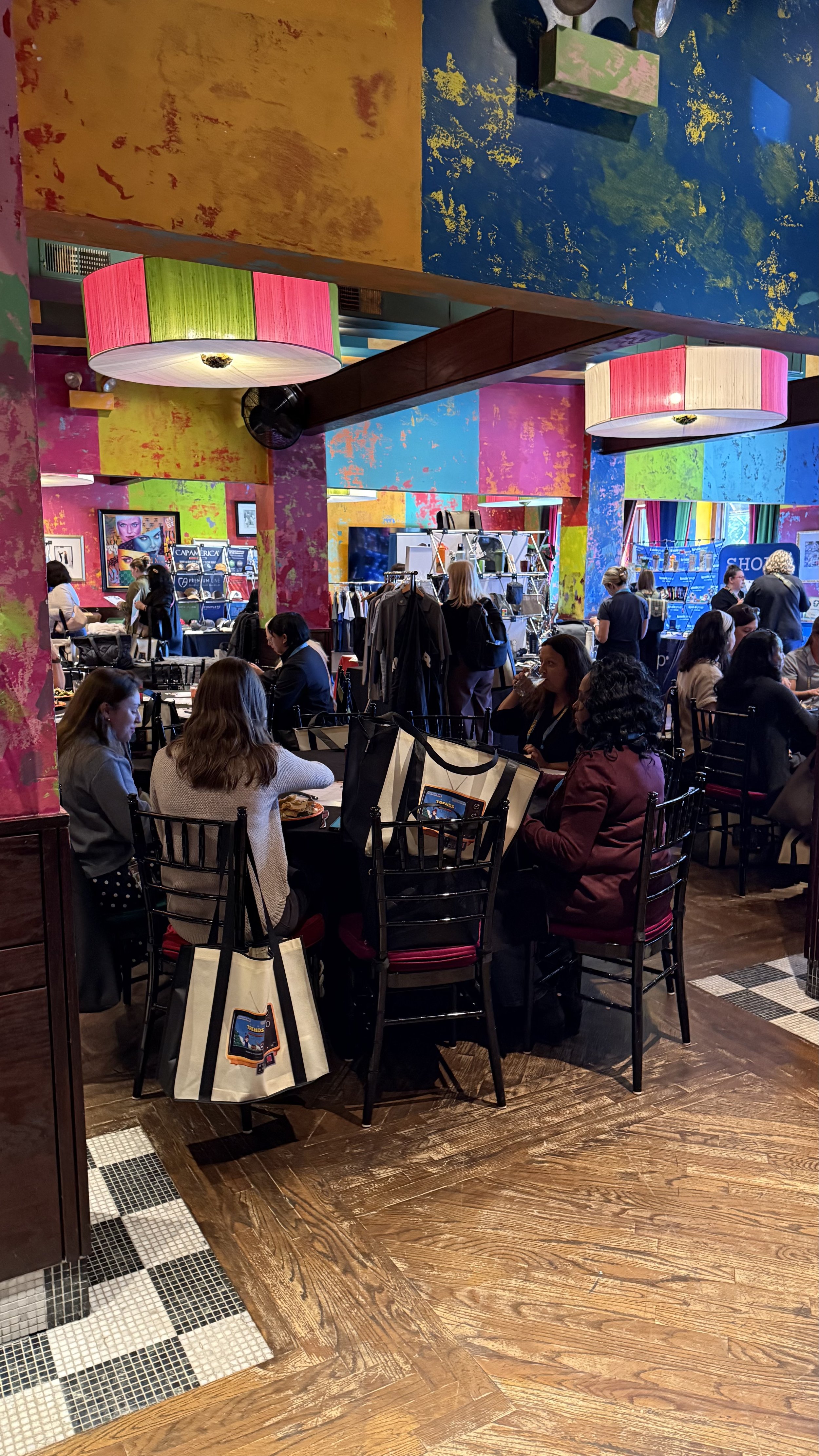
We started calling it a networking event. A few events ago, we added that language to the invitation and promotion. Before, guests mostly sat and ate quietly with their own coworkers. Now they introduce themselves to people at other tables and swap ideas about their projects. Whether it’s the word “networking,” the round tables that let everyone see each other, or both, the lunch tables are livelier than ever at Trends and Friends. Guests get something here they can’t get from a catalog or a rep’s email.
The value is real. Great food, great swag, and useful product knowledge give people a reason to put us on their calendars.
Attendance is only part of the picture. Guests who come to our events tend to spend more on merch year over year, and people do buy what they see at the show. The notes on those clipboards tell us what clients are working on, and our vendor partnerships get stronger every time.
What We’d Tweak
The quality of our Trends and Friends event has improved so much because we change something every time using the feedback we are getting from our clients, teammates and vendor partners. We’ve updated our project forms substantially. We cut questions nobody answered, added a section for each vendor so we can see which products guests liked, and gave guests more free-form space to describe their events and quantities. This year, pre-printing guest names on the project sheets solved the problem of people forgetting to write their names. One client also told us our multi-line rep was confusing, so next time we’ll call that out better. Small changes add up, so ask for feedback and use it.
Your Event Cheat Sheet
Define your goals first
Start planning about a year out.
Design the flow: swag at the back, check-in away from the crowd.
Pick a theme and make the merch tell one story.
Make giveaways double as demos of what you can do.
Staff for conversation, not for standing behind tables.
Call it a networking event and seat people where they can see each other.
Collect notes, then change one thing every time.
FAQ
How do you measure ROI from a client event? Look at repeat attendance, referrals, year-over-year spending, and the quality of project conversations, not just one day’s orders.
How do you get more people to show up? Make the first visit worth it, give people a reason to talk to each other, and let word of mouth do the rest.
How far in advance should you plan a client event? About a year for the venue and dates, and six to eight months for the theme.
The Wrap-Up
An event like this is a lunch, a showroom, and a thank-you in one room. The best ones are built on people, and the results follow.
Want to throw an event that works as hard as your team does? Let’s plan it together.